Project SPARSH-Addressing learning crisis
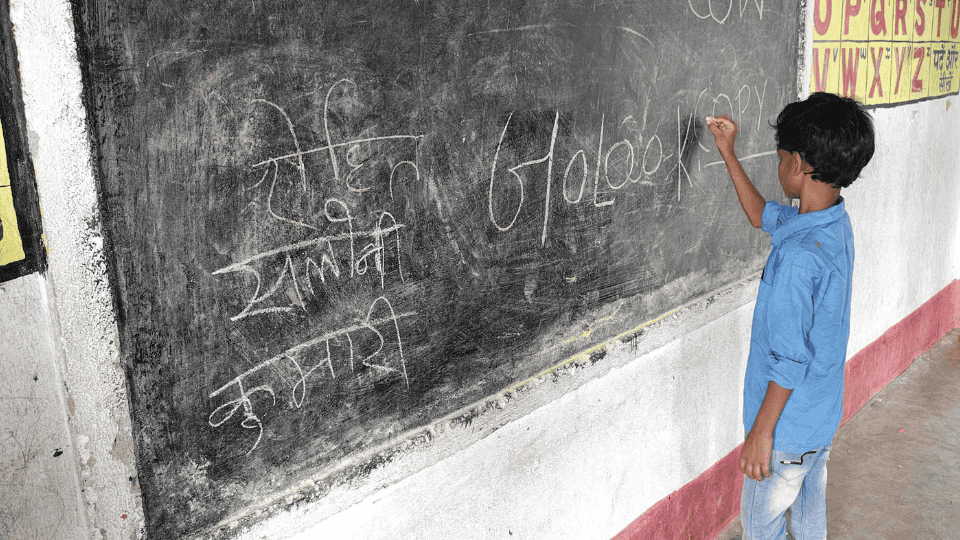
India’s learning crisis has reached a turning point — and ASER 2024 makes it painfully clear. In Bihar, only 20.1% of Class 3 students can read a Class 2 text, and just 28.2% can solve basic subtraction. Even by Class 5, only 41.2% can read at Class 2 level, and barely 30.7% can do division.
These numbers reveal a harsh truth: children aren’t learning, even after years in school.
Amid this urgent situation, Project SPARSH by Glad Bharat Foundation, in collaboration with the Pragati CSR Committee of IIM Bodhgaya, has emerged as a breakthrough initiative helping children of Gaya, Bihar to build strong reading, writing, and numeracy skills at the right age.
Why FLN Must Be a Priority in Bihar
Foundational Literacy and Numeracy are the building blocks of all future learning. Without the ability to read with understanding or perform basic arithmetic by early primary grades, children fall behind rapidly.
In rural Gaya, these challenges worsen due to:
- Under-resourced schools
- Multi-grade classrooms
- High student–teacher ratios
- Limited access to remedial support
These factors collectively create learning poverty, leaving children disengaged and at risk of dropout by middle school.
How Project SPARSH Is Changing Classroom Learning in Gaya
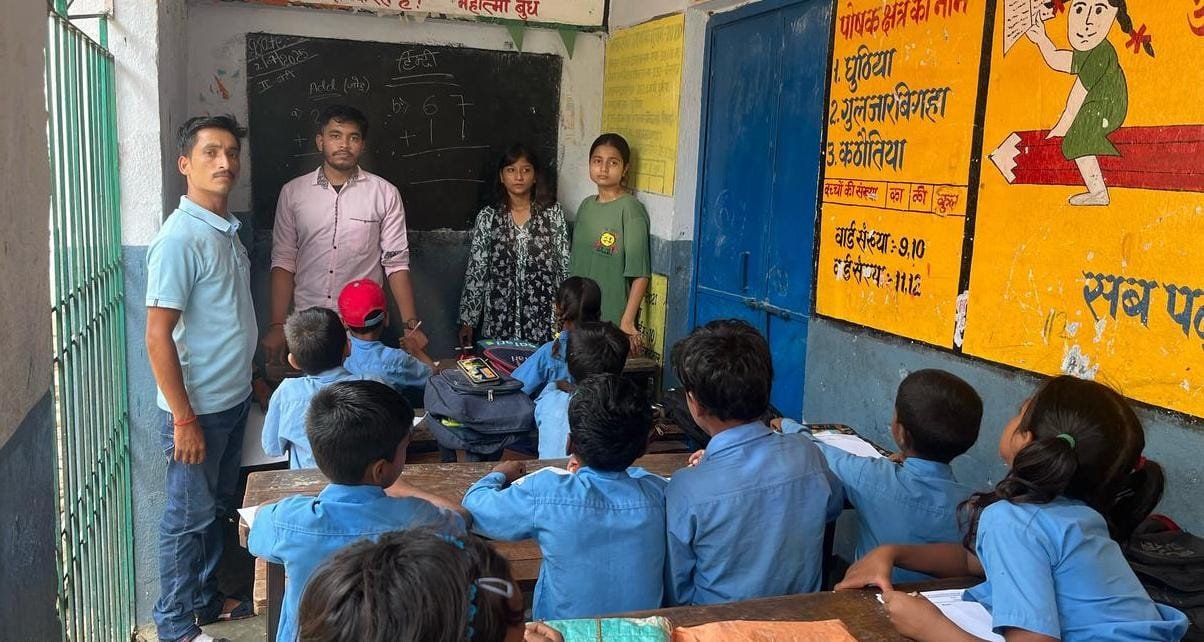
Launched as pilot in Mahodar village of Bodhgaya block — an IIM Bodhgaya adopted village — Project SPARSH introduces a child-centered, activity-based FLN model designed for rural classrooms.
SPARSH Works On:
1. Activity-Based FLN Learning
Using simple teaching tools such as story cards, number games, bottle-cap counting activities, and picture-based reading aids.
2. Teacher Empowerment
Training teachers in NIPUN Bharat-aligned FLN pedagogy
3. Daily Remedial Support
Short assessments and targeted small-group support to close learning gaps early.
4. Community & Parental Engagement
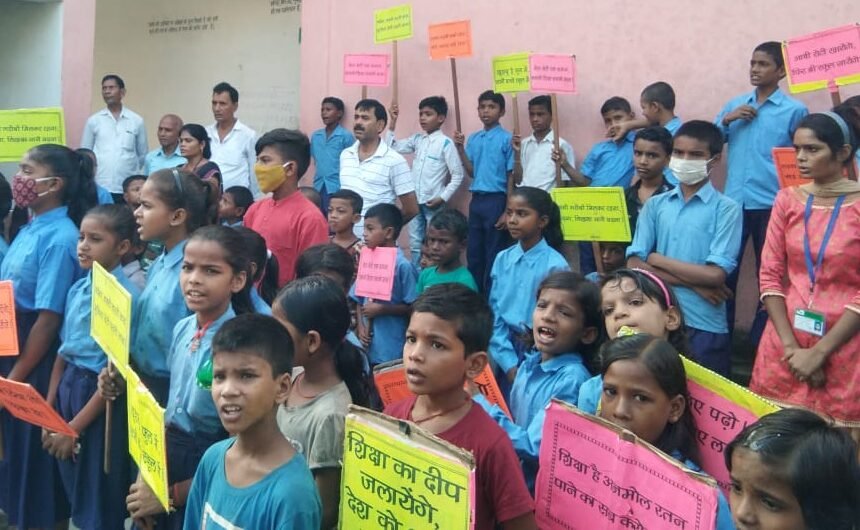
Reading camps, parent circles, and community storytelling sessions encourage learning beyond school.
The pilot has demonstrated higher attendance, improved reading fluency, better number sense, and increased classroom participation.
Glad Bharat Foundation now plans to scale SPARSH to 10+ schools, reaching 800+ children across the Bodhgaya block.
Your contribution can play an active role in scaling SPARSH to 10+ schools, impacting 800+ children directly
How SPARSH Helped Kavita
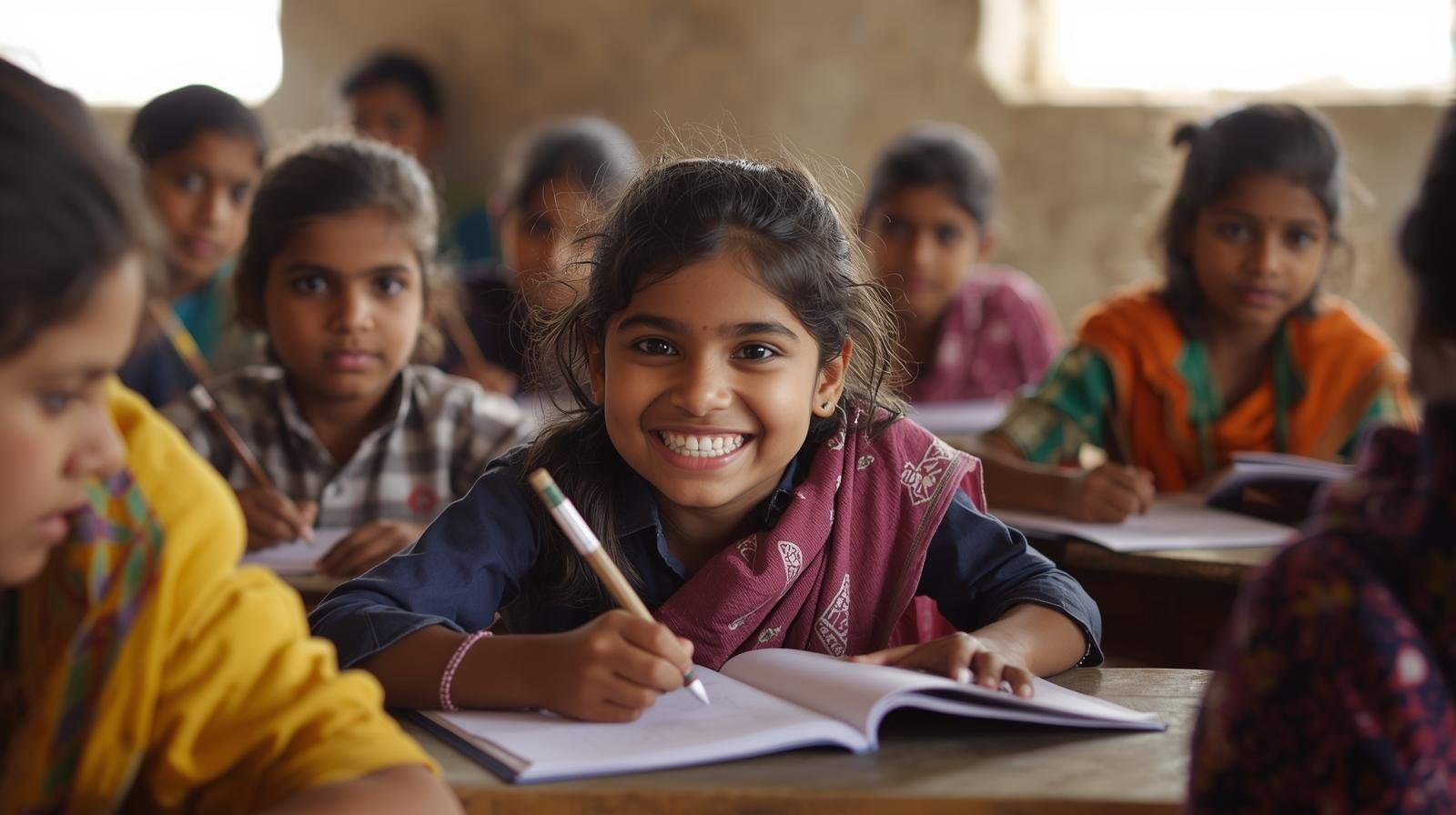
When SPARSH started, Kavita, a Class 5 student, could barely read two lines without pausing. She struggled with basic subtraction and rarely raised her hand in class.
With SPARSH’s simple interventions —
- daily 15-minute reading circles
- number games
- hand made picture-based story cards
— her learning changed.
Withine 10 months,
- Kavita read short paragraphs confidently
- Solved two-digit subtraction in number games
- Participated actively in class
- Improved her attendance
Her teacher shared, “Today, Kavita is the first to volunteer during reading time.”
This proves that low-cost tools + consistent daily support = measurable learning gains.
Why SPARSH Is Crucial for Gaya’s Education Future
Project SPARSH directly addresses learning poverty, strengthens teacher capacity, and supports early-grade learning through proven child-centered methods. Scaling SPARSH to 10+ schools can create a strong learning foundation for hundreds of children in rural Gaya.
By investing in FLN today, we are ensuring:
- Better learning outcomes
- Lower dropout rates
- Higher confidence and curiosity in children
- Long-term educational success